

Over eighty percent of American travelers now expect to manage every part of their trip with just one app or website. As travel grows more complex, the need for seamless planning tools becomes essential. Multi-service travel platforms answer this demand by combining flights, hotels, car rentals, and more in one place, making travel decisions easier and faster. This article explains how these platforms work and why they are quickly replacing single-service sites.
Table of Contents
- Defining Multi-Service Travel Platforms Today
- Key Features and Integrated Travel Tools
- Different Types and Use Cases Explained
- Cost, Safety, and Legal Considerations
- Comparing Single-Service Platforms and Risks
Key Takeaways
| Point | Details |
|---|---|
| Integration of Services | Multi-service travel platforms consolidate various travel services into a single interface, enhancing convenience for users. |
| Utilization of Advanced Technology | These platforms leverage AI and machine learning to provide personalized travel recommendations and streamline planning processes. |
| Diverse Platform Types | Different multi-service platforms cater to specific traveler needs, ranging from business travel to budget and adventure planning. |
| Comparative Advantages | Multi-service platforms offer broader options, seamless integration, and superior risk management compared to traditional single-service platforms. |
Defining Multi-Service Travel Platforms Today
Multi-service travel platforms represent a technological evolution in modern travel planning, transforming how travelers research, book, and manage their journeys. These digital ecosystems consolidate multiple travel services into a single, integrated interface, offering unprecedented convenience and efficiency. A prime example is the Mobility as a Service (MaaS) model, which enables users to plan, book, and pay for diverse transportation and travel services through one unified gateway.
At their core, these platforms function like sophisticated digital travel hubs, connecting travelers with an interconnected network of services. A Global Distribution System (GDS) serves as the technological backbone, creating a computerized network that facilitates transactions between various travel industry providers. This means travelers can seamlessly access and compare offerings from airlines, hotels, car rental companies, and other service providers without navigating multiple websites or platforms.
The key characteristics of modern multi-service travel platforms include:
- Comprehensive service integration
- Real-time booking capabilities
- Transparent pricing comparisons
- Centralized account management
- Personalized travel recommendations
- Instant confirmation and documentation
These platforms leverage advanced technologies like artificial intelligence and machine learning to provide increasingly tailored travel experiences. They analyze user preferences, past travel history, and current trends to offer intelligent suggestions and streamline the entire travel planning process.
Pro Traveler Tip: Always compare multiple multi-service platforms and check for exclusive deals or bundled services that could save you money on your next trip.
Key Features and Integrated Travel Tools
Multi-service travel platforms have revolutionized the way travelers interact with transportation and booking services by incorporating sophisticated digital booking features and technologies. These advanced platforms integrate comprehensive tools that streamline the entire travel experience, providing users with unprecedented convenience and flexibility.
The core technological capabilities of modern travel platforms include several critical integrated tools:
- Secure Payment Gateways: Enabling safe, encrypted financial transactions
- Dynamic Pricing Mechanisms: Offering real-time price comparisons and competitive rates
- Multi-Language Support: Facilitating international user experiences
- Advanced Search Filters: Allowing granular customization of travel preferences
- 24/7 Virtual Assistance: Providing immediate customer support
- Multi-Currency Options: Supporting seamless global transactions
These platforms leverage sophisticated algorithms and machine learning technologies to enhance user experience and conversion rates. By analyzing user behavior, preferences, and historical data, they can generate personalized recommendations, predict pricing trends, and offer tailored travel solutions that match individual traveler needs.

The technological infrastructure behind these platforms transforms traditional travel planning into an intelligent, adaptive experience. Integrated tools now go beyond basic booking, offering comprehensive travel management that includes real-time updates, itinerary tracking, and predictive travel insights.
Pro Traveler Tip: Always explore a platform’s full range of integrated tools before booking to maximize your travel planning efficiency and potential cost savings.
Different Types and Use Cases Explained
Multi-service travel platforms emerge in various specialized configurations, each designed to address specific traveler needs and industry segments. Some platforms focus on specific travel niches, while others provide comprehensive, end-to-end travel management solutions. Innovative platforms like Trekiz demonstrate how technology can enable complex travel planning, offering users the ability to build multi-destination travel itineraries in real-time with unprecedented flexibility.
The primary categories of multi-service travel platforms can be classified into several key types:
- Business Travel Platforms: Tailored for corporate travelers with expense tracking and itinerary management
- Leisure Travel Platforms: Emphasizing personalized vacation planning and experience discovery
- Budget Travel Platforms: Focusing on cost-effective options and budget-conscious travelers
- Adventure and Specialized Travel Platforms: Catering to niche travel experiences like backpacking or expedition planning
- Collaborative Travel Platforms: Enabling group travel coordination and shared itinerary management
Some platforms specialize in unique technological approaches, such as virtual interlining technologies that combine independent carrier tickets into seamless travel experiences. These innovative solutions address complex travel routing challenges, particularly for international travelers navigating multiple carriers and complex travel routes.
The evolution of these platforms reflects changing traveler expectations, with users increasingly seeking integrated, intelligent solutions that simplify the entire travel ecosystem. Modern platforms go beyond simple booking, providing comprehensive travel management that includes real-time updates, personalized recommendations, and adaptive planning tools.
Here’s a summary of the main platform types and their unique strengths:
| Platform Type | Primary Focus | Typical User Base |
|---|---|---|
| Business Travel Platforms | Expense control, policies | Corporate travelers |
| Leisure Travel Platforms | Customized vacations, discovery | Casual tourists |
| Budget Travel Platforms | Low-cost options, deals | Value-conscious travelers |
| Adventure/Specialized Platforms | Niche activities, itineraries | Explorers, hobbyists |
| Collaborative Travel Platforms | Group planning, coordination | Friends, family groups |
Pro Traveler Tip: Research multiple platform types before committing to ensure you select a travel tool that precisely matches your specific travel style and requirements.
Cost, Safety, and Legal Considerations
Multi-service travel platforms navigate complex financial, safety, and regulatory landscapes, addressing critical concerns for modern travelers. Mobility as a Service (MaaS) platforms incorporate innovative payment models that balance cost-effectiveness with comprehensive service offerings, including monthly subscription options that can significantly reduce overall travel expenses.
Key financial and safety considerations for travelers include:
- Transparent Pricing: Clear breakdown of all costs and potential additional fees
- Refund and Cancellation Policies: Flexible options for changing travel plans
- Data Privacy Protection: Secure handling of personal and financial information
- Comprehensive Travel Insurance: Integrated coverage options
- Compliance with International Regulations: Adherence to global travel standards
- Multiple Payment Method Support: Flexibility in financial transactions
Global Distribution Systems play a crucial role in ensuring legal compliance and safety standards across different travel service providers. These platforms implement rigorous verification processes, including real-time inventory management and cross-platform regulatory checks that protect both travelers and service providers from potential legal complications.
The financial model of multi-service travel platforms has evolved to offer more flexible and user-centric options. Modern platforms provide dynamic pricing strategies, transparent cost structures, and multiple payment alternatives that cater to diverse traveler needs. This approach helps mitigate financial risks while providing comprehensive travel solutions that balance affordability with comprehensive service coverage.
Pro Traveler Tip: Always review the complete terms of service, focusing on cancellation policies, data protection clauses, and hidden fees before committing to any multi-service travel platform.
Comparing Single-Service Platforms and Risks
Traditional single-service travel platforms present significant limitations compared to comprehensive multi-service solutions. Online marketplaces like HomeToGo demonstrate how aggregating multiple providers can transform the travel booking experience, offering travelers unprecedented access to diverse options that single-platform services cannot match.
Key differences between single-service and multi-service platforms include:
- Scope of Options: Single platforms provide limited choices, while multi-service platforms offer comprehensive selections
- Price Comparison: Multi-service platforms enable real-time cross-provider pricing analysis
- Booking Complexity: Multi-service solutions handle intricate travel arrangements more efficiently
- User Experience: Integrated platforms provide smoother, more connected travel planning
- Risk Management: Comprehensive platforms offer better protection and more robust support systems
Single-service platforms carry inherent risks that can compromise traveler experiences. These platforms typically lack the sophisticated risk mitigation strategies of multi-service solutions, leaving users more vulnerable to pricing inconsistencies, limited customer support, and fragmented travel planning. Travelers using isolated platforms often encounter challenges such as incompatible booking systems, restricted modification options, and minimal cross-service coordination.
The technological evolution of travel platforms has fundamentally shifted toward integrated, intelligent systems that prioritize user convenience and comprehensive service delivery. Modern travelers increasingly demand platforms that can seamlessly manage multiple aspects of their travel experience, from initial booking to post-travel support, rendering traditional single-service models progressively obsolete.
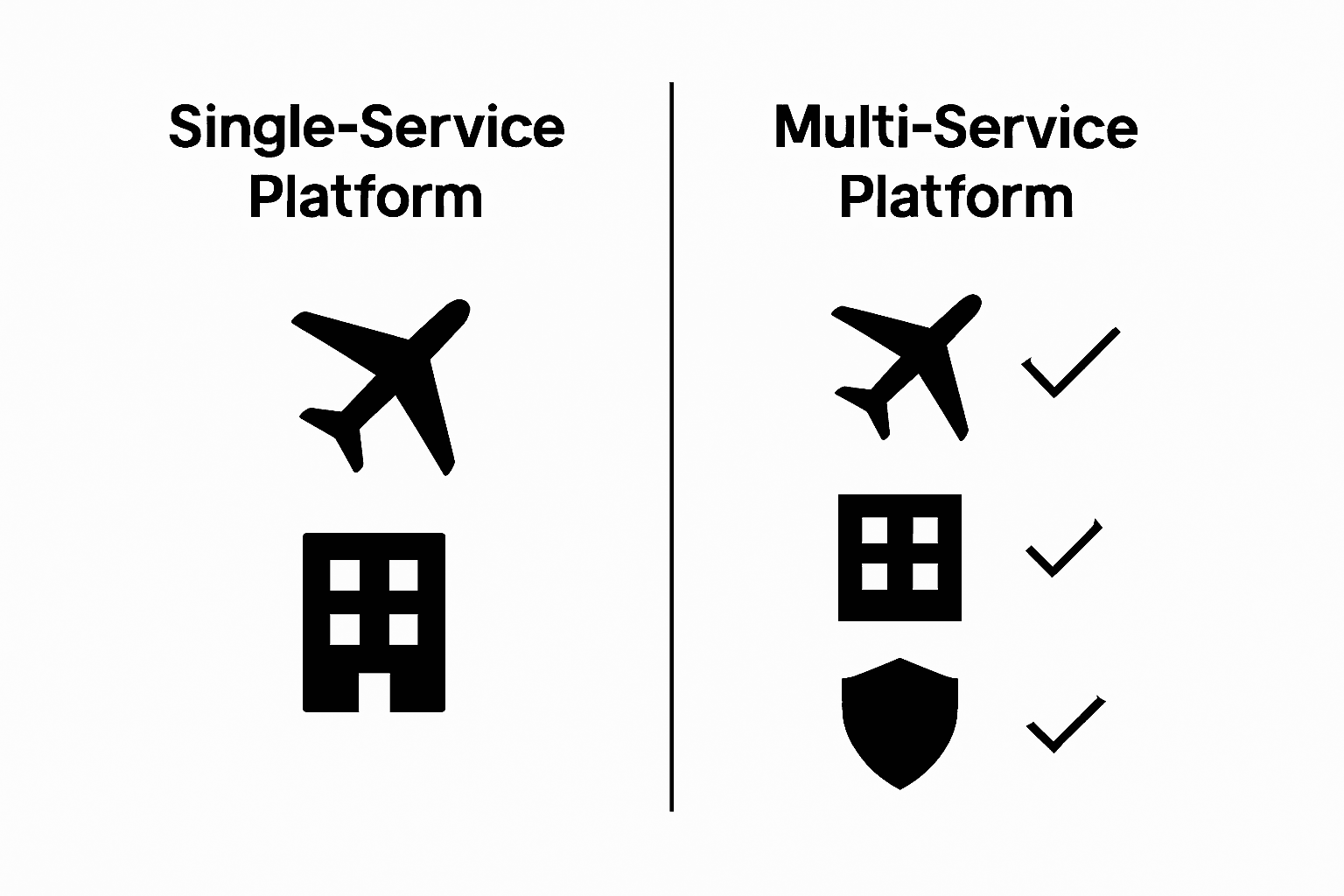
To better understand how platform models impact traveler experiences, compare single-service and multi-service travel solutions:
| Aspect | Single-Service Platform | Multi-Service Platform |
|---|---|---|
| Service Coverage | Limited, one provider | Broad, multiple providers |
| Planning Effort | Manual, time-consuming | Streamlined, consolidated tools |
| Support Response | Isolated, basic | Integrated, robust options |
| Risk Management | Few protections, fragmented | Enhanced safeguards, centralized |
Pro Traveler Tip: Always compare multiple platforms and prioritize multi-service solutions that offer comprehensive coverage, flexible booking options, and integrated risk management features.
Discover Seamless Travel Planning with Toogoodtravels.net
Travelers often struggle with managing multiple bookings, visa requirements, and travel insurance when using various platforms. This article highlights how multi-service travel platforms simplify your journey by integrating flights, hotels, transport, and real-time booking tools into one place. If you want to avoid fragmented experiences and reduce the stress of last-minute arrangements, Toogoodtravels.net offers exactly that solution with a focus on streamlining your entire travel process.

Take control of your travel plans today with Toogoodtravels.net, your one-stop platform for booking flights and hotels, managing e-visas, and securing travel insurance all in one place. Don’t let complex travel logistics hold you back. Explore our complete range of travel services now and enjoy a smooth, confident journey from planning to boarding. Start your next trip smarter and safer at Toogoodtravels.net.
Frequently Asked Questions
What are multi-service travel platforms?
Multi-service travel platforms are digital ecosystems that consolidate various travel services, enabling users to research, book, and manage their journeys through a single, integrated interface.
How do multi-service travel platforms differ from single-service platforms?
Multi-service platforms offer a wide range of options from multiple providers, allowing for real-time price comparisons and streamlined booking processes, whereas single-service platforms typically provide limited choices from one provider.
What key features should I look for in a multi-service travel platform?
When selecting a multi-service travel platform, consider features like secure payment gateways, dynamic pricing mechanisms, real-time booking capabilities, multi-language support, and 24/7 customer assistance.
Are multi-service travel platforms safe to use?
Yes, multi-service travel platforms generally prioritize user safety by implementing transparent pricing, robust data privacy measures, and compliance with international regulations to help protect travelers’ personal and financial information.